
Kitten Care
We are here to help you care for your new kitten and give them the essential health, nutrition and behavioural support they need during their first year. This includes vaccinations, parasite prevention, microchipping, neutering, feeding advice, litter training, dental care and guidance on settling your kitten safely into your home.
We love welcoming new kittens into the practice. It is one of the very best parts of the job, and our vets and nurses are here to guide you through every stage with friendly advice, expert clinical care and unlimited support for families on our PetPeople Health Plan.
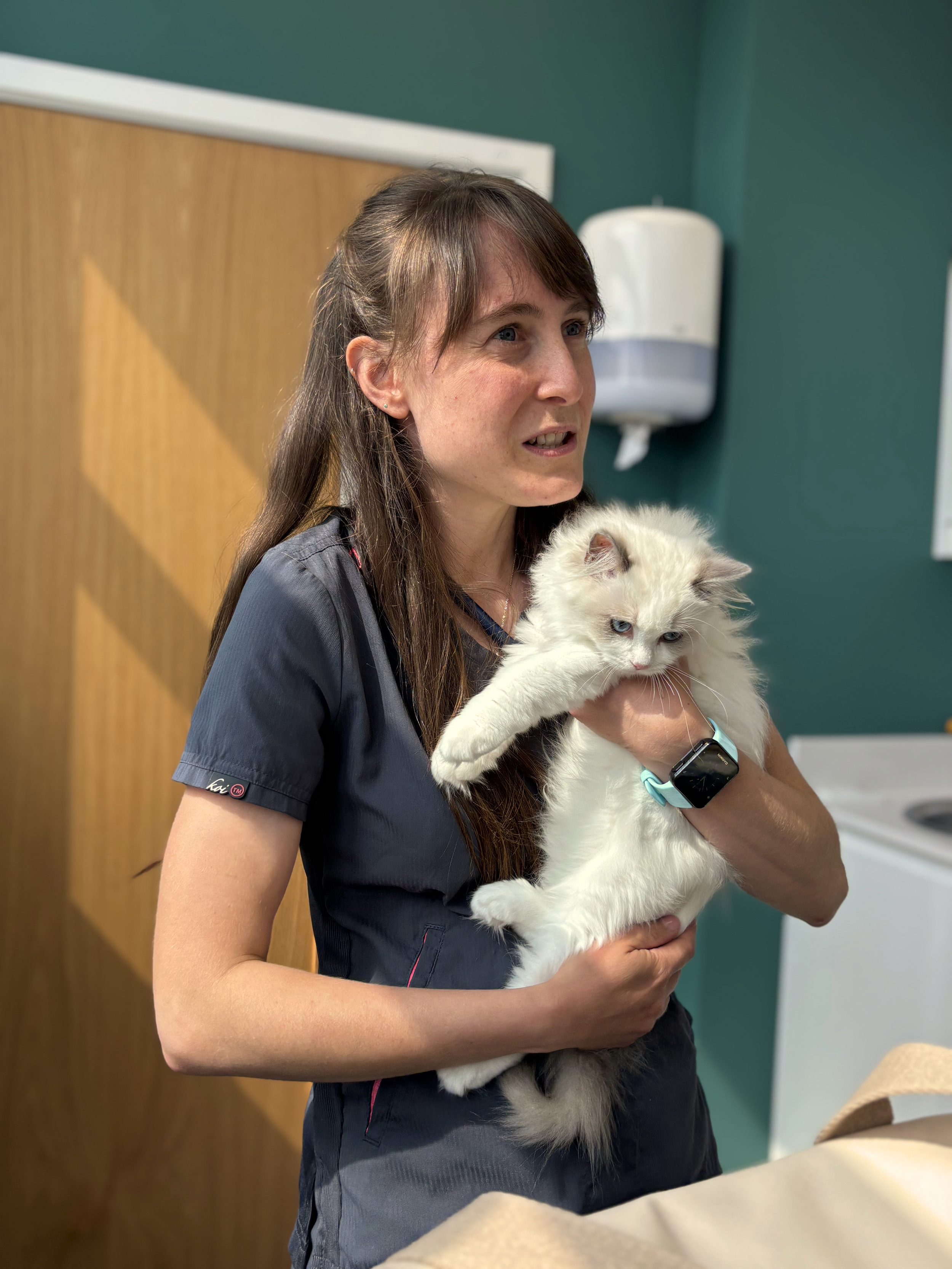
Why kitten care matters
A kitten’s first months set the foundations for a lifetime of good health. Early vaccinations protect against serious disease, parasite prevention keeps both your pet and your family safe, and good routines around feeding, litter trays and handling make a world of difference as your kitten grows.
Our team sees many kittens each year and we are well placed to guide new and experienced owners alike. You will have a dedicated team on hand, clear advice tailored to your home and lifestyle, and access to modern veterinary care seven days a week.

More about kitten care
-
A healthy kitten should be:
Bright, playful and curious, but sleeping up to 18 hours a day
Passing well-formed brown stools 2 to 4 times daily
Urinating pale, straw-coloured urine without straining
Rarely vomiting, coughing or sneezing
If anything seems unusual, please get in touch. We are always happy to help.
-
Feed a high-quality kitten specific diet, ideally both wet and dry food.
Offer small, frequent meals (3 to 4 times a day).
Provide fresh water at all times; many kittens adore water fountains.
Keep water separate from food to encourage drinking.
If you need help choosing a diet, our vets and nurses can guide you.
-
Keep your kitten indoors until fully vaccinated, microchipped, and spayed or neutered.
Provide one litter tray per cat, plus one extra.
For two cats, that means three trays, for three cats, four trays, and so on!
Choose a tray that allows your kitten to turn, dig and feel secure.
If accidents happen, try changing the tray style, location or litter type.
Cats need to feel safe when toileting. Small changes to the placement, size, or style of litter tray often make a big difference.
-
Kittens need protection against:
Cat flu
Infectious enteritis (panleukopenia)
Feline leukaemia virus (FeLV)
Course: Two injections 3 to 4 weeks apart, starting at 9 weeks
Full immunity: 3 to 4 weeks after the second vaccine
Boosters: Annual boosters are often recommended, though individual pets may have different requirementsWe can also provide rabies vaccination from 12 weeks of age for overseas travel.
-
Kittens often pick up fleas, ear mites and intestinal worms. We commonly treat against:
Roundworms
Fleas
Ticks
Tapeworms
We only recommend vet-approved treatments because non-prescription products are often ineffective or unsafe.
Your kitten’s parasite control treatment is included if you join our PetPeople Health Plan.
-
We strongly recommend neutering for all cats. For cats with outdoor access, it is essential. Neutering is typically done when cats are 4-6 months of age, but we can tailor the timing to you and your pet.
The benefits:
Prevents unwanted pregnancy
Cats can successfully breed when they’re as young as 4 to 5 months old!
In households with both a male and female kitten, we may recommend neutering one or both of them on the earlier side.
Reduces roaming, fighting and spraying in males
Fighting increases the risk of cats catching diseases such as FIV and FeLV, so neutering lowers their risk.
Female cats in heat are extremely vocal, agitated, and distressed. Spaying prevents this distress and disruption for both you and your cat.
Both spaying and neutering protect your cat against some cancers and infections.
Our vets can help you choose the right time for your kitten.
-
We can microchip your kitten at a vaccination appointment or during neutering. Microchipping is legally required, and all cats must be chipped by 20 weeks to avoid fines.
We register the chip to you, and you can update details online at any time.
-
Kittens and cats receive:
Unlimited consultations with a vet or nurse
Online video consultations
Annual booster vaccinations, plus the primary course or a restart if needed
Nail clips, blood pressure checks and microchipping
Discounts on neutering, dentistry and long-term injectables
Silver and Gold also include bespoke flea, tick and worm treatment.
Join PetPeople Health Plans before your kitten's first appointment and their primary vaccination course is included.
-
We strongly recommend choosing a lifetime pet insurance policy, as this type of cover helps protect your pet year after year, even for ongoing conditions. If your kitten is not already insured, we can offer you four free weeks of insurance coverage via an external insurance company. This gives you the time to find an insurance policy that works best for you.
Once you have a policy in place, it is best to stay with the same provider long term. Switching insurers later can create gaps in cover, especially for any conditions your pet has already been treated for.
-
Keep your kitten away from:
Lilies – these are highly toxic, even the pollen or the water cut flowers have been sitting in
Raisins and grapes
Onions, garlic and leeks
Antifreeze
Many human medications
If you are unsure whether something is safe, please ask. We are always happy to advise.
-
Early dental care prevents gum disease later in life.
Start getting your kitten used to having their mouth and teeth gently touched and examined from 8 to 10 weeks
Introduce cat toothpaste at 12 to 14 weeks
Use a finger brush from 16 weeks
Move to a soft toothbrush from 20 weeks onwards
Daily brushing is ideal, but even a few times a week has real benefits.
We can give step-by-step coaching at any visit.
-
We're here for your kitten around the clock. Just check our emergency contact details for how to reach us.
Frequently asked questions about kitten care
-
Once they are neutered, microchipped, and their vaccinations are at full strength (3-4 weeks after their second vaccination).
-
Usually monthly, depending on the product used. We will tailor a plan for your kitten.
-
Yes, but make changes slowly over 5 to 7 days to avoid stomach upsets.
-
Absolutely. Early support helps ensure a healthy start.
-
Yes, with supervision. Positive, gentle handling helps kittens grow into confident adult cats. To ensure everyone benefits from the experience, teach children to recognise the signs of the kitten being overstimulated or stressed.

If you would like to book your kitten’s first visit or have any questions, no matter how small, our team would be delighted to help.