Anaesthetics & Sedation
Sedation and general anaesthesia are terms to describe the ways we keep pets calm, still, and pain-free during medical, imaging or surgical procedures
These effects are achieved by giving your pet certain medications. Sedation gently relaxes your pet so they remain conscious but less aware and less stressed.
General anaesthesia creates a controlled, reversible state of unconsciousness so your pet cannot feel or remember what is happening.
We use modern drugs, careful dosing, and continuous monitoring to keep your pet as safe and comfortable as possible.
Why anaesthesia and sedation matter
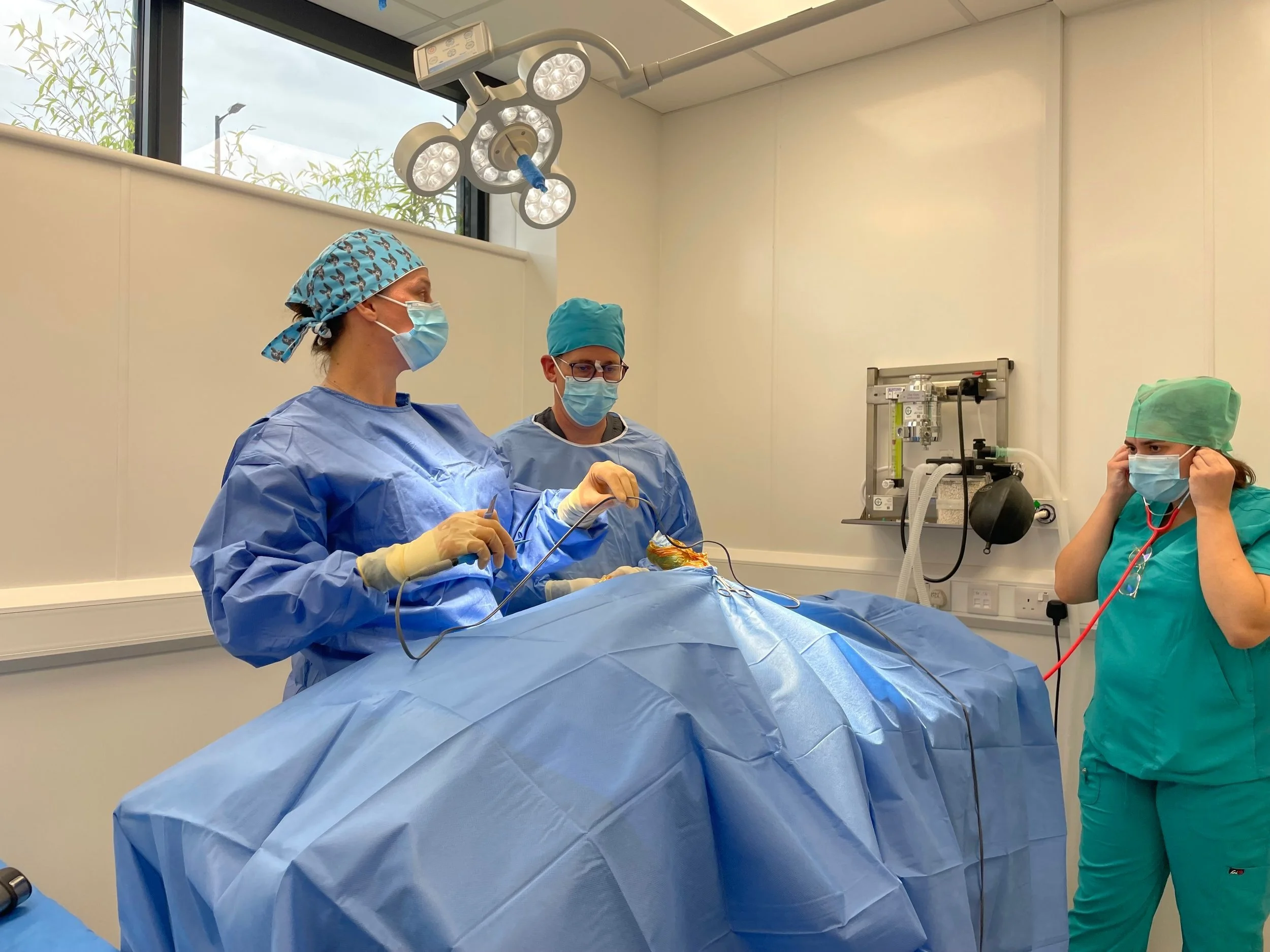
Most medical and surgical procedures simply can’t be done safely or humanely without sedation or anaesthetic. From X-rays and ultrasound to dental work and major surgery, these drugs allow us to treat your pet thoroughly while protecting them from fear and pain.
Our experienced vets and veterinary nurses follow strict protocols, tailor the approach to each animal, and use hospital-grade monitoring equipment. We’ll always talk you through the plan, the risks, and the benefits so you feel informed and reassured.
More about anaesthetics &
sedation
Sedation vs general anaesthesia
Sedation
Calms and relaxes your pet
They remain conscious but drowsy
Used for non-painful or minor procedures such as X-rays or some ultrasounds
Can also be used to help anxious pets cope with treatments such as nail clips or minor bandage changes
General anaesthetic
Your pet is fully asleep and unaware
Used for anything that could be painful or requires complete stillness, including surgery, dental procedures or CT scans. In both cases, we usually place an IV (intravenous) cannula so we can give your pet the drugs and fluids safely throughout the procedure.
During sedation or anaesthesia
Your pet is never left alone. An experienced veterinary nurse monitors them throughout, under the supervision of the veterinary surgeon. Depending on the case, monitoring may include:
Heart rate and rhythm (ECG)
Oxygen levels (pulse oximetry)
Blood pressure
Breathing rate and exhaled CO₂
Body temperature
Where appropriate, we also use local anaesthetic nerve blocks and tailored pain relief, so your pet remains as comfortable as possible during and after their procedure.
Before the procedure
Before any sedation or general anaesthetic, we will:
Perform a full clinical examination
Discuss your pet’s medical history and any medications they might be taking
Often recommend pre-anaesthetic blood tests, especially for older or higher-risk pets. These tests help us determine which anaesthetic drugs are safest for your pet.
Ask you to withhold food for a set period beforehand (don’t worry, we’ll give you clear written instructions)
You’ll be asked to sign a consent form confirming you understand the procedure, its purpose, and the potential risks.
Recovery and aftercare
Once the procedure is complete, your pet is moved to our recovery area and monitored closely as they wake up. They may be:
Sleepy or a little wobbly
Less interested in food for a short time
We’ll only send them home when they are safely awake and able to stand. You’ll receive written home-care instructions covering:
Feeding
Exercise restrictions
Wound care (if applicable)
When and how to contact us if you’re worried
Frequently asked questions about anaesthetics & sedation
-
Sedation makes your pet relaxed and drowsy but not fully unconscious. General anaesthetic puts your pet into a controlled, reversible sleep so they feel no pain and are completely unaware of the procedure.
-
All anaesthesia carries some risk, but with modern drugs, careful assessment, and continuous monitoring, complications are uncommon. We tailor every protocol to the individual pet and will discuss any specific risks with you beforehand.
-
Age alone is not a disease. Many senior pets undergo anaesthesia safely. We may recommend extra checks such as blood tests, blood pressure measurement, or imaging to assess risk and plan the safest approach.
-
We’ll give you clear instructions, but in most cases you’ll be asked to:
Withhold food for a period before admission
Allow access to water until a certain time
Let us know about any new symptoms or changes in medication
If your pet accidentally eats before their procedure, please tell us as we may need to adjust the plan.
-
Most pets are a little sleepy and quieter than usual for 12 to 24 hours. Provide a warm, calm place to rest, offer small meals as directed, and keep any exercise gentle.
Cats should be kept indoors, with a litter tray available, even if they normally have outdoor access. If your pet seems very distressed, unsteady, or you are worried at any point, contact us straight away.
If you are unsure whether anaesthesia and sedation are right for your pet, we are always happy to discuss options and offer honest, practical advice.