Grass seeds
Grass seeds are the small, arrow-shaped seed heads that dry out and drop from long grass in summer. They look harmless, but that pointed shape and the tiny backward barbs mean they only travel one way – forwards, into your pet. They can work their way into paws, ears, eyes and skin in seconds, and once they’re in, they don’t come out on their own.
We see a spike in grass seed cases every summer, especially in dogs walked through London’s parks and long grass. Caught early, most are quick and simple to remove. Left too long, they can burrow deep and cause real problems.
Why grass seeds matter
A grass seed is more than a passing irritation. Because of those barbs, it can travel through the body – under the skin, down an ear canal or into the airways – causing painful abscesses, infection and, in serious cases, damage to internal organs.
We’d always rather see your pet sooner than later. A grass seed spotted on the day of a walk is a two-minute job. The same seed a week on can mean sedation, surgery and a much longer recovery.
More about grass seeds
For dogs: where grass seeds cause trouble
Paws
The most common spot. Seeds work into the soft skin between the toes, causing a swollen, weepy lump and constant licking. Once under the skin they can travel up the leg.
Ears
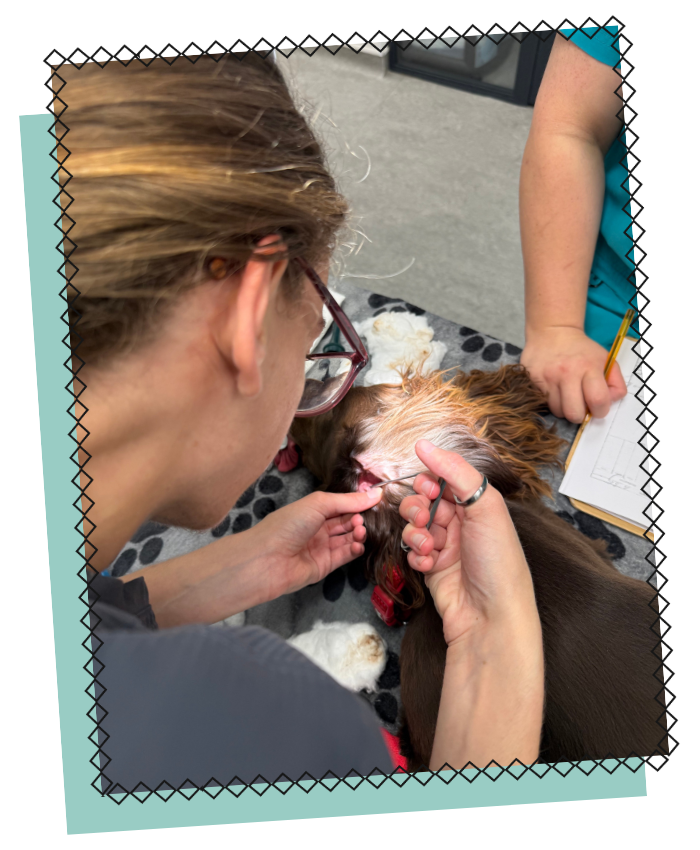
A seed down the ear canal is intensely uncomfortable. Sudden, violent head shaking or scratching at one ear after a walk is a classic sign, and a seed this deep almost always needs removing by a vet.
Eyes
Seeds can lodge behind the eyelid, leaving the eye red, streaming and held shut. This is painful and needs seeing quickly to protect the eye.
Nose
Breathed in while sniffing through long grass. Sudden, repeated bouts of violent sneezing straight after a walk are the giveaway.
Skin and body
Seeds can pierce the skin almost anywhere, then migrate, causing abscesses and swellings that flare up days or even weeks later.
Recommended approach:
Every dog is different, and some coats and lifestyles carry more risk than others. To keep them safe through the summer, we’ll often suggest:
Check your dog over after every walk – paws, ears, armpits, tummy and around the eyes
Keep the hair between the paw pads trimmed, and consider a summer trim for long-coated breeds
Stick to mown paths and avoid long, seeding grass at the height of summer
Come and see us the same day if you spot swelling, head shaking, squinting or sudden sneezing
For cats: where grass seeds cause trouble
Grass seeds are less common in cats than dogs, but outdoor cats and hunters who push through long grass are still at risk.
Paws and skin
Seeds can work into the skin between the toes, or anywhere the coat is thin, causing swelling, licking and abscesses.
Ears
A seed in the ear canal causes sudden head shaking and scratching, and needs a vet to remove it safely.
Eyes
A red, streaming or half-closed eye after time outdoors can mean a seed is lodged behind the lid and needs seeing quickly.
Recommended approach:
Every cat is different. For outdoor cats over the summer, we’ll often suggest:
Check your cat over regularly, paying attention to paws, ears and face
Gently groom long-coated cats to keep fur from matting around a hidden seed
Book in the same day if you notice head shaking, a sore eye or persistent licking of one spot
Why prompt treatment matters
A grass seed won’t work its own way back out – the barbs make sure of that. Trying to dig one out at home can push it deeper or snap it, leaving part behind to cause infection.
When you bring your pet to us, we:
Find and remove the whole seed safely, using sedation if it’s lodged deep
Treat any infection before it has a chance to spread
Check there isn’t a second seed hiding nearby
Get your pet comfortable again as quickly as possible
Frequently asked questions about grass seeds
-
Mainly late spring through summer, from around May to September, when the seed heads dry out and drop.
-
Any long or seeding grass – parks, verges, meadows and gardens. London’s parks and commons see plenty every summer.
-
Common signs are sudden licking of a paw, violent head shaking, a squinting or streaming eye, or a burst of repeated sneezing straight after a walk.
-
It’s best not to. A seed you can see may be the tip of one that’s already burrowing, and pulling at it can leave part behind. Let us remove it properly.
-
Check your pet after every walk, keep the hair around their paws and ears trimmed, and steer clear of long, seeding grass in high summer.
If you’re not sure whether it’s a grass seed or something else, our team is always happy to take a look. A quick check today can save your pet a much bigger problem later on.